

Tegenungan Waterfall is often one of the first natural landmarks travelers encounter in Bali. Located just a short drive from Ubud, it offers an immediate encounter with the island’s lush, flowing landscape. Yet beyond its popularity lies a deeper rhythm—one that reveals itself slowly, through timing, perspective, and intention.
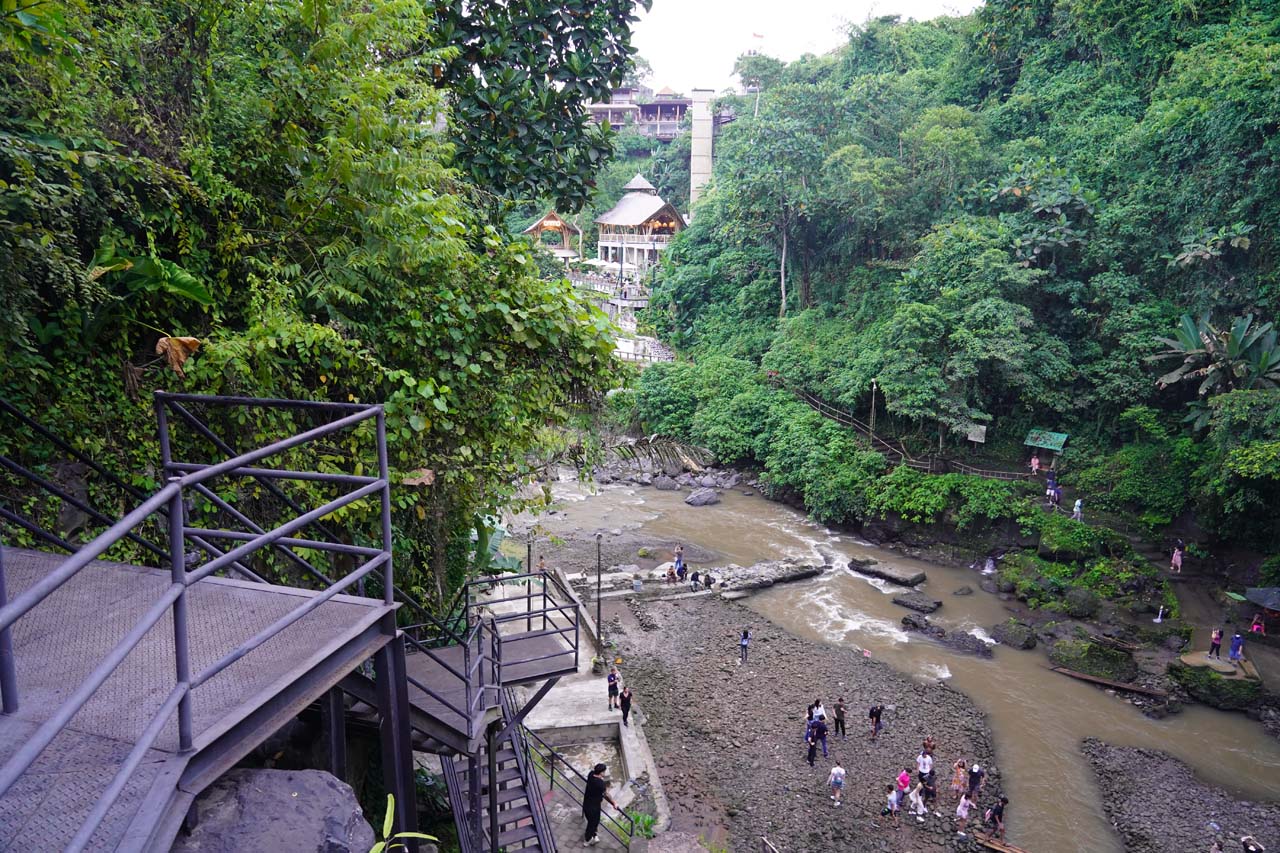
Set in the village of Kemenuh Village, Tegenungan Waterfall is one of Bali’s most accessible waterfalls. Unlike many others that require long treks through forests or mountains, Tegenungan is reached via a well-maintained path and a series of steps descending into a river valley.
Its ease of access has made it one of the most visited waterfalls on the island. But accessibility, in Bali, does not diminish significance. Water—flowing, cleansing, and ever-present—holds spiritual weight in Balinese life. Even a popular site like Tegenungan carries layers of meaning beyond its visual appeal.
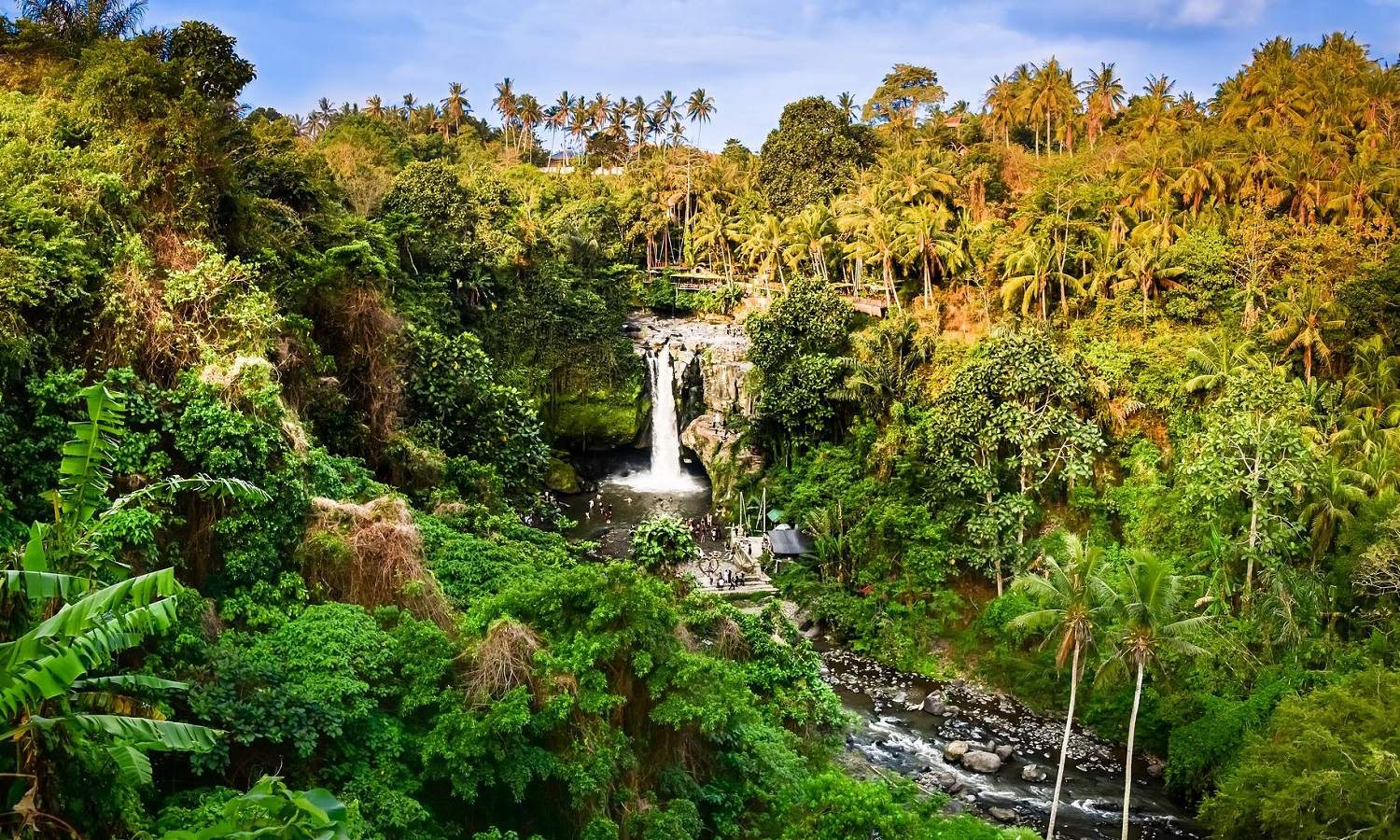
The waterfall itself cascades powerfully into a wide basin, surrounded by dense greenery and layered rock formations. During the rainy season, the flow becomes especially dramatic, transforming the entire valley into a living, breathing landscape.
The Nature of the Experience
At first glance, Tegenungan feels immediate. You arrive, descend, and the waterfall reveals itself in full force. But the experience shifts depending on how you approach it.
The Descent
The path downward is structured but immersive. As you move lower, the sound of water grows louder, replacing conversation and movement above. The air cools, thick with moisture and the scent of earth.
Each step becomes a gradual transition—from observation to participation.
The Waterfall Itself
Standing before Tegenungan, the scale becomes clear. The water crashes into the pool below with a steady, unbroken force. Mist rises and settles on the skin, softening the boundary between body and environment.
Swimming is possible when conditions allow, though the current can be strong. More often, visitors stand near the edge, letting the atmosphere settle around them rather than entering fully.
Viewing Points
Beyond the base, there are multiple vantage points:
- Midway terraces for photography
- Elevated platforms for panoramic views
- Nearby cafes overlooking the valley
Each offers a slightly different relationship with the waterfall—closer, further, quieter, or more social.
Practical Guide to Visiting Tegenungan Waterfall
Best Time to Visit
Timing shapes the experience significantly.
- Early Morning (6:30 – 9:00 AM):
The most peaceful time. Fewer visitors, softer light, and a more reflective atmosphere. - Late Morning to Afternoon:
The busiest period. The waterfall becomes lively, energetic, and more crowded. - Late Afternoon (4:30 – 6:00 PM):
A second window of calm as crowds begin to thin and the light softens again.
Seasonal Considerations
- Dry Season (April – October):
Easier access, clearer water, and safer conditions for swimming. - Rainy Season (November – March):
Stronger flow, more dramatic visuals, but sometimes limited access due to water levels.
Entrance and Facilities
- Entrance fee: typically around IDR 20,000–30,000
- Parking area available near the entrance
- Cafes, rest areas, and small shops nearby
- Changing rooms and basic facilities available
The infrastructure around Tegenungan reflects its popularity, but it also makes the experience more approachable for a wider range of travelers.
What to Bring
- Comfortable walking shoes or sandals
- Water and light snacks
- Swimwear and towel (if planning to enter the water)
- A light layer for early morning visits
- A camera—but also the willingness to put it away

Local Perspective
In Bali, water is not only a natural element—it is part of a spiritual system that connects mountains, rivers, temples, and the sea.
While Tegenungan is not a formal water temple like those found in other parts of the island, the river that feeds it is part of this larger network. Locals still bring small offerings, known as canang sari, placing them near the water’s edge or along pathways.
These gestures are quiet but meaningful. They reflect a worldview where nature is not separate from daily life, but intertwined with it.
For visitors, recognizing this presence—without needing to fully understand it—can shift the experience. The waterfall becomes more than a scenic stop; it becomes part of a living cultural landscape.
Experiential Layer: Beyond the Surface
Tegenungan is often described as “touristic,” but that description depends on how it is approached.
If visited quickly, it can feel like a checklist destination:
Arrive → Photograph → Leave.
But if approached with attention, it offers something more subtle.
Slowing Down the Visit
Arriving early changes everything. The absence of crowds allows the natural rhythm of the place to emerge—the steady fall of water, the shifting light, the quiet movement of locals preparing offerings or opening nearby stalls.
Choosing Where to Sit
Instead of focusing only on the main viewing point, find a place slightly removed from the center. A step along the path, a rock near the edge, or a quiet corner of a terrace.
From there, the experience becomes less about the waterfall as an object, and more about being within its environment.
Letting the Moment Unfold
There is a tendency to capture waterfalls through photographs. And while Tegenungan is visually striking, its essence is not fully captured in images.
It is in the sound, the air, the feeling of moisture on skin, and the subtle awareness that forms when nothing else is demanded of your attention.
This is where the experience deepens.
Integrating Tegenungan into a Wider Journey
Tegenungan is rarely visited in isolation. Its location makes it a natural part of a broader exploration of the Ubud and Gianyar region.
Nearby experiences include:
- Rice fields and village walks
- Artisan workshops in surrounding areas
- Small temples and local markets
- Quiet river valleys less visited by travelers
When woven into a day with intention, Tegenungan becomes a transition point—a moment of pause between cultural and natural encounters.
Through curated journeys, places like this can be experienced not as isolated attractions, but as connected elements of Bali’s living landscape.
Explore Journey with Gangga Experience
There is a quiet shift that happens when a place is not rushed. Tegenungan Waterfall, like much of Bali, reveals itself differently depending on how it is entered—not just physically, but mentally. What begins as a simple visit can become something more reflective, more grounded, and more personal.
In Bali, experiences are rarely singular. They unfold through layers—through landscapes, rituals, conversations, and moments of stillness. A waterfall becomes part of a wider story, one that includes villages, traditions, and the unseen connections between them.
Through Gangga Experience, journeys are shaped with this awareness—allowing each place to be felt, not just seen. Each step becomes part of a deeper understanding, guided not by urgency, but by presence.
→ Explore Journey with Gangga Experience
https://ganggaexperience.com/journey