

There is a certain rhythm to mornings in Ubud—a gentle unfolding of light, offerings placed quietly on the ground, and shop doors opening one by one.
At the center of this daily choreography sits the Ubud Art Market, a place often described simply as a shopping destination, yet experienced more deeply as a cultural encounter.
To walk through it is not only to browse, but to observe how Bali presents itself—carefully, beautifully, and always with a sense of story.
A Market Designed for Wandering

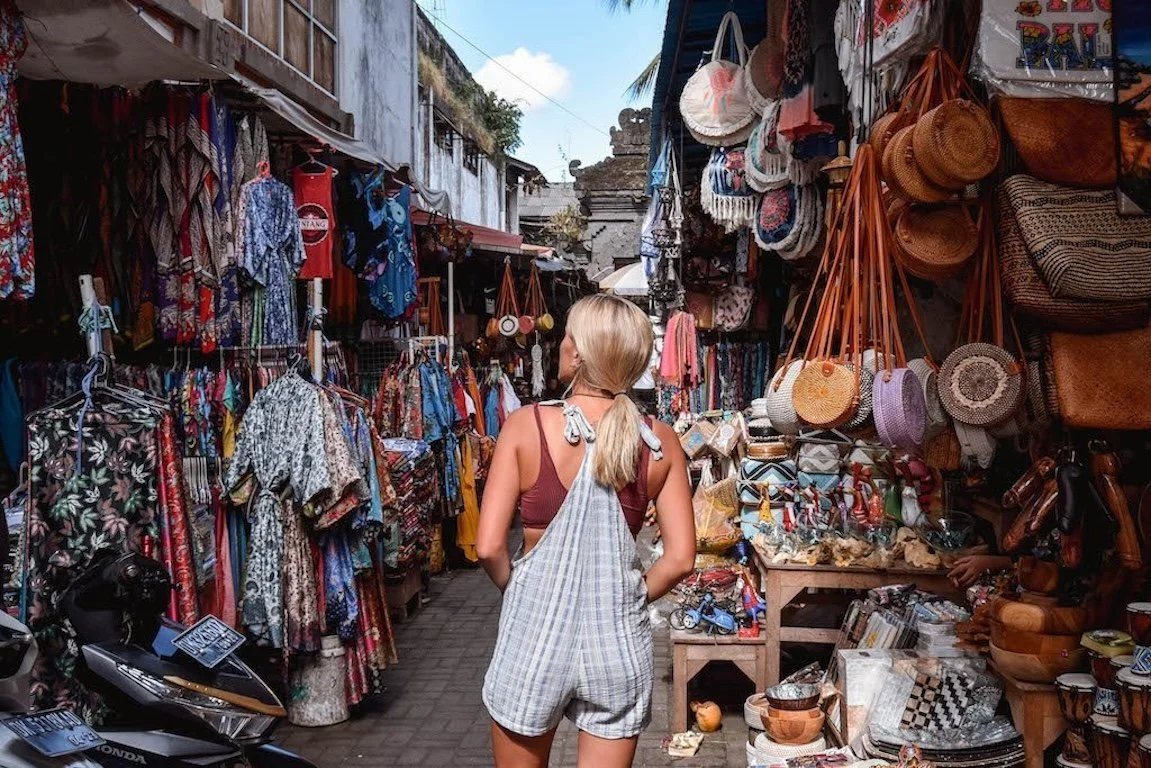
Unlike traditional local markets, Ubud Art Market feels composed. Its layout invites slow exploration rather than hurried movement.
Situated near the Ubud Palace, the market naturally blends into a day of cultural discovery—temples, cafés, galleries, and quiet streets.
Why It Feels Different
There is a subtle refinement here. Stalls are arranged with attention, colors feel intentional, and interactions are often softened by familiarity with international visitors.
Yet beneath this surface lies something distinctly Balinese—a continuity of craft, ritual, and daily practice.
What to Buy at Ubud Art Market

The market offers a wide selection, but not everything holds the same depth of meaning or quality. Knowing what to look for changes the experience entirely.
Woven Bags and Rattan Crafts
These have become iconic symbols of Bali. Lightweight and intricately made, they reflect the island’s relationship with natural materials.
Look for pieces with tight weaving and subtle variations—signs of handmade work.
Textiles and Clothing
From batik sarongs to flowing dresses, textiles here balance tradition and contemporary style.
Some are ceremonial in origin, others designed for everyday wear. Understanding this difference adds quiet significance to your purchase.
Silver Jewelry
Handcrafted silver pieces are widely available, often inspired by Balinese motifs—flowers, leaves, and symbolic patterns.
For those interested in deeper craftsmanship, nearby villages such as Celuk Village are known for silver-making traditions.
Paintings and Decorative Art
Artworks range from traditional narrative scenes to modern interpretations.
Rather than searching for perfection, consider what resonates. In Bali, art is often less about precision and more about feeling.
How to Shop with Intention
Shopping in Ubud is not only about choosing objects—it is about how you engage with the process.
Understand the Role of Bargaining
Prices are rarely fixed, and bargaining is part of the experience.
Approach it with lightness. A smile, a small conversation, and mutual respect often lead to a natural agreement.
Take Your Time
The market rewards patience. Walking through quickly reveals only the surface, while lingering allows details to emerge.
Often, the most meaningful finds are not the most obvious ones.
Look Beyond Trends
Some items are designed specifically for tourists and may appear repeatedly across stalls.
Instead, notice variations—subtle differences in texture, pattern, or finishing that suggest individuality.
When to Visit for the Best Experience
Early Morning: Quiet and Grounded
Arriving between 8–10 AM offers a calmer atmosphere. Vendors are setting up, and the energy feels unhurried.
This is when the market feels closest to its original rhythm.
Midday to Afternoon: Lively and Social
As the day progresses, the market becomes more vibrant and crowded. This can be enjoyable if you appreciate a more dynamic environment.
However, it also means less space for quiet exploration.
Navigating the Market with Ease

Start from the Edges
Entering from less crowded sides can make the experience feel more relaxed, allowing you to ease into the environment.
Explore the Upper Levels
Many visitors remain on the ground floor, but upper levels often hold quieter corners and unexpected finds.
Carry Small Cash
Most transactions are cash-based, and having smaller denominations makes bargaining smoother.
Beyond Shopping: What the Market Reveals
To see Ubud Art Market only as a place to buy is to miss its quieter layers.
A Stage for Daily Ritual
Offerings appear between stalls, incense drifts through narrow pathways, and small gestures of devotion unfold throughout the day.
These moments are easy to overlook, yet they shape the atmosphere profoundly.
The Subtle Art of Presentation
Unlike more traditional markets such as Sukawati Art Market, Ubud emphasizes presentation.
Objects are arranged not only to sell, but to invite attention—to create a visual dialogue between maker and observer.
A Reflection on Choice
In a place filled with objects, the act of choosing becomes reflective.
What draws your attention? What feels meaningful? What will remain with you beyond the moment?
These questions linger longer than any purchase.
A Different Way to Remember Bali
Souvenirs often attempt to capture a place. But Bali resists being reduced to objects.
The market, in its quiet complexity, suggests something else—that what we take with us is not the item itself, but the moment of connection it represents.
And perhaps that is the true value of shopping here.
FAQ
Is Ubud Art Market worth visiting?
Yes, Ubud Art Market offers a rich blend of shopping and cultural atmosphere, making it one of Bali’s most accessible market experiences.
What are the best things to buy at Ubud Art Market?
Popular items include woven bags, batik clothing, silver jewelry, paintings, and handmade crafts.
Do you need to bargain in Ubud Art Market?
Yes, bargaining is expected, though it is generally more relaxed compared to traditional markets.
What is the best time to visit Ubud Art Market?
Morning (8–10 AM) is ideal for a quieter and more comfortable experience.
Is Ubud Art Market expensive?
Prices are higher than local markets like Sukawati Art Market, but still reasonable with negotiation.
How long should you spend at the market?
Allow at least 1–2 hours to explore without rushing.
Explore Journey with Gangga Experience
In Ubud, even something as simple as a market visit carries layers of meaning. It is a place where beauty is arranged with care, yet still rooted in something deeper—ritual, craft, and the quiet rhythm of daily life.
Experiences in Bali rarely reveal themselves all at once. They unfold gradually, through textures, conversations, and moments that might otherwise pass unnoticed. A woven bag, a piece of silver, a shared smile—each becomes part of a larger memory.
If you feel drawn to explore Bali beyond its visible charm, there are journeys that invite you into these subtler layers—where each experience is shaped not by urgency, but by presence.
→ Explore Journey with Gangga Experience
https://ganggaexperience.com/journey/
Book Your Journey: reservation@ganggaexperience.com
More Journey: https://ganggaexperience.com/journey/


