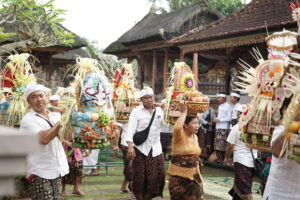

There are places in Bali where commerce feels almost ceremonial—where buying and selling is not merely transactional, but part of a long continuum of craft, tradition, and daily life. Sukawati Art Market is one of those places.
Often described simply as a “souvenir market,” Sukawati reveals something deeper when approached with patience. It is not curated like boutique shops in Ubud. It is layered, dense, and at times chaotic—but within that, it offers a more honest encounter with Bali’s artistic identity.

A Market Rooted in Daily Balinese Life
Unlike many markets shaped primarily for tourism, Sukawati retains a strong connection to local rhythms. Early in the morning, the market still serves Balinese residents—selling textiles, ceremonial items, and everyday goods.
By mid-morning, it gradually transforms. Visitors arrive. Stalls shift their focus toward paintings, carvings, batik fabrics, and handcrafted souvenirs.
This duality is what gives Sukawati its character.
More Than a Souvenir Destination
Many travelers come searching for “cheap art.” And yes, prices here are often lower than in more polished areas.
But what is often overlooked is the origin of these items:
- Paintings inspired by classical Balinese styles
- Handwoven textiles reflecting regional techniques
- Wood carvings rooted in spiritual symbolism
These are not random objects—they are fragments of a living culture, reproduced at scale yet still carrying traces of tradition.
What to Buy at Sukawati Art Market
Walking through Sukawati can feel overwhelming. The density of stalls, colors, and textures creates a sensory overload. Knowing what to look for helps transform the experience.
Textiles and Batik
Batik fabrics are among the most popular items. Look closely and you’ll notice variations:
- Hand-drawn batik (more intricate, higher value)
- Printed batik (more affordable, widely available)
These textiles are not just decorative—they are tied to ceremonies and identity.
Paintings
Sukawati is known for its affordable paintings. Many are reproductions of traditional styles such as:
- Kamasan-inspired storytelling scenes
- Nature landscapes with rice fields and temples
While they may not be gallery originals, they still reflect recognizable Balinese visual narratives.
Handicrafts and Souvenirs
Expect a wide range:
- Wooden masks and carvings
- Handmade bags
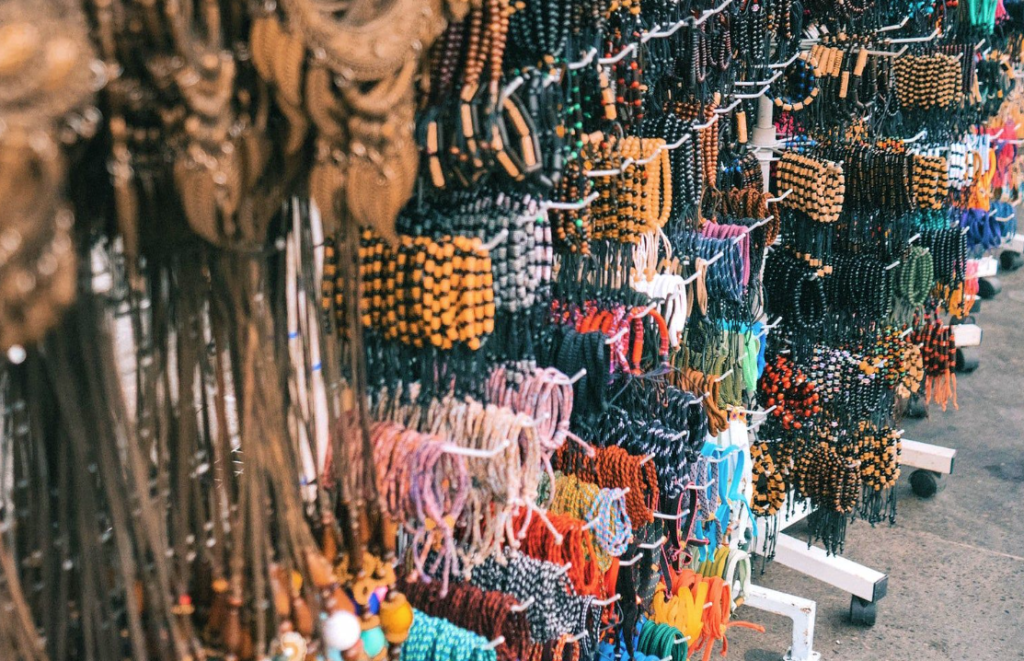
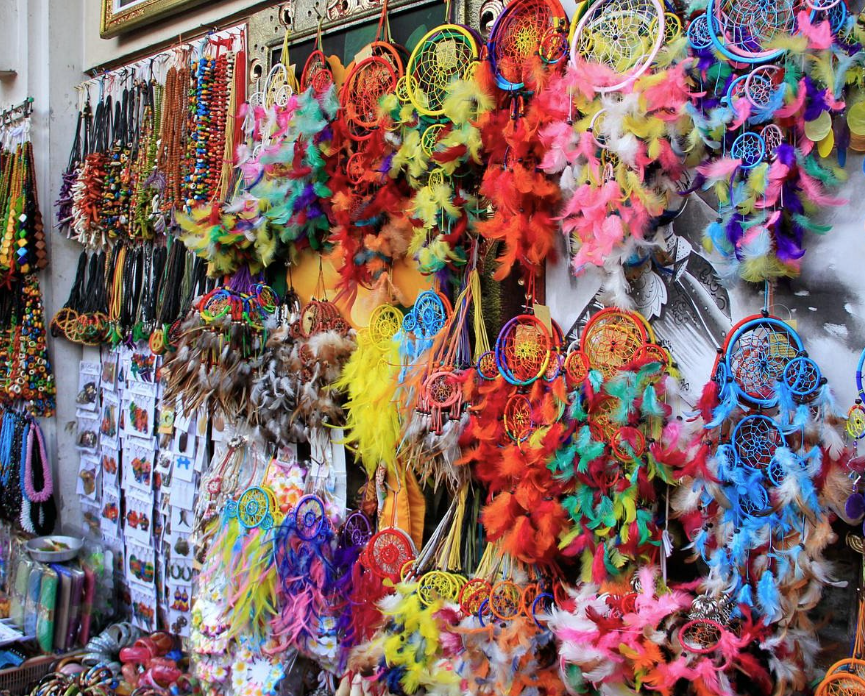
- Jewelry and small decorative items
Here, craftsmanship varies. Some pieces are finely made, others more commercial. The experience lies in discerning the difference.
How to Navigate Sukawati Art Market
Sukawati is not a place for passive browsing. It asks for engagement.
Arrive Early
The best time to visit is between 8:00 AM and 10:00 AM.
- Cooler temperature
- Fewer crowds
- More interaction with local vendors
Bargaining Is Expected
Prices are rarely fixed. Negotiation is part of the process—but it should be done with respect.
A gentle approach works best:
- Start lower than the asking price
- Smile, stay patient
- Accept that walking away is part of the rhythm
Take Your Time
The market is layered. What you see in the first row of stalls is only a fraction of what’s available.
Move deeper. Observe quietly. Let the space reveal itself gradually.
The Experience Beyond Shopping
What makes Sukawati memorable is not what you buy, but how you move through it.
There is a certain intimacy in traditional markets—the closeness of space, the human interaction, the unfiltered nature of exchange.
Unlike curated retail environments, Sukawati does not attempt to impress. It simply exists, layered with voices, textures, and time.
And in that simplicity, something becomes clear:
Travel is not always about finding something rare. Sometimes, it is about recognizing meaning in what is abundant.
FAQ
Is Sukawati Art Market worth visiting?
Yes, especially if you are interested in traditional crafts at more accessible prices. It offers a more local and less curated experience than other markets.
What is the best time to visit Sukawati Art Market?
Early morning (8:00–10:00 AM) is ideal for a calmer atmosphere and better interaction with vendors.
Is bargaining necessary at Sukawati?
Yes, bargaining is expected. Prices are flexible, but negotiation should remain respectful.
How is Sukawati different from Ubud Art Market?
Sukawati is more local, less polished, and generally cheaper. Ubud Art Market is more curated and tourist-oriented.
Can I find authentic handmade items at Sukawati?
Yes, but quality varies. It’s important to look closely and ask questions about the items.
How long should I spend at Sukawati Art Market?
Around 1–2 hours is ideal if you want to explore beyond the surface.
Explore Journey with Gangga Experience
There is something quietly revealing about places like Sukawati. Not because they are perfect—but because they are real. Layers of craft, commerce, and daily life intersect in ways that are not staged, but simply lived.
In Bali, experiences rarely unfold all at once. They emerge gradually—through early mornings, shared conversations, and moments that feel almost unremarkable until they linger in memory.
To travel here is to move gently between these layers, allowing each place to speak in its own time.
→ Explore Journey with Gangga Experience
https://ganggaexperience.com/journey/
Book Your Journey: reservation@ganggaexperience.com
More Journey: https://ganggaexperience.com/journey/