

daily ritual, and cultural identity.From mountain springs to temple pools, water represents purification, balance, and the continuous renewal of life.
Understanding Bali’s sacred water traditions offers a deeper understanding of how spirituality is lived,
not simply observed.
Why Water Is Sacred in Balinese Belief
In Balinese Hindu philosophy, balance is the foundation of harmony — balance between seen and unseen forces,
between nature and human life, between physical and spiritual states.
Water plays a central role in maintaining this balance. It is considered a medium through which purification can occur,
carrying away what is heavy, stagnant, or misaligned. Because water sustains life physically, it is also believed to
restore life spiritually.
Holy Springs and Their Origins
Many of Bali’s sacred water sources emerge naturally from the earth — particularly from volcanic and mountainous regions.
These springs are not artificially created; they are discovered and then honored.
Over time, temples are built around these springs to protect and preserve them. The location itself becomes sacred,
not because of human construction, but because of the natural flow of water that has existed long before.
The landscape and spirituality are inseparable.
The Meaning of Purification (Melukat)
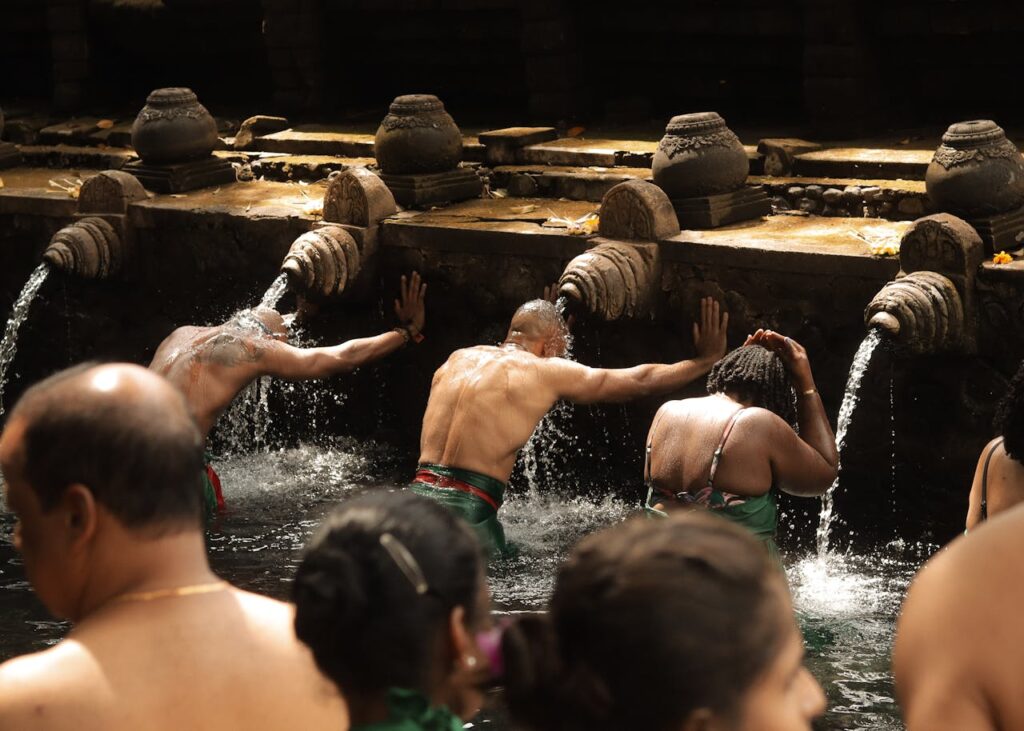
Melukat is the ritual of purification using sacred water. Participants immerse themselves or allow water
to flow over the body while prayers or intentions are held.
The purpose is not symbolic cleansing alone. It is believed to restore energetic balance, release emotional burdens,
and renew spiritual clarity. The process is quiet, deliberate, and deeply personal.
Even when many people participate, the experience remains inward.
Water Temples as Living Centers of Ritual
Unlike monuments that exist primarily for visitors, water temples remain active places of worship.
Local communities visit regularly for ceremonies connected to life events, seasonal cycles,
and spiritual maintenance.
Offerings are made daily. Rituals follow traditional calendars. The space remains alive with purpose.
Visitors who enter respectfully are witnessing continuity rather than performance.
Why Sacred Water Practices Continue Today
Despite modern life and growing tourism, sacred water traditions remain central to Balinese identity.
They persist because they serve an ongoing function — maintaining balance between human life and the natural world.
Water rituals are not preserved out of nostalgia. They continue because they are still meaningful.
Water as Balance and Renewal
To understand Bali’s sacred water traditions is to understand a worldview where nature and spirituality cannot be separated.
Water flows continuously, reshaping what it touches. In the same way, purification is not a one-time event,
but part of an ongoing process of renewal.
And through water, Bali expresses one of its most enduring beliefs — that balance must be restored again and again.
Continuing the Wellness Journey
Sacred water traditions are one part of a wider understanding of wellness in Bali — shaped by ritual, nature,
and the rhythm of daily life.
→ Explore Wellness Experiences
Begin Your Journey with Gangga Experience
Experience Bali more deeply with Gangga Experience.
From wellness rituals and cultural encounters to thoughtfully curated journeys through Bali’s living landscapes,
each experience is designed to connect you with the island in a meaningful way.


