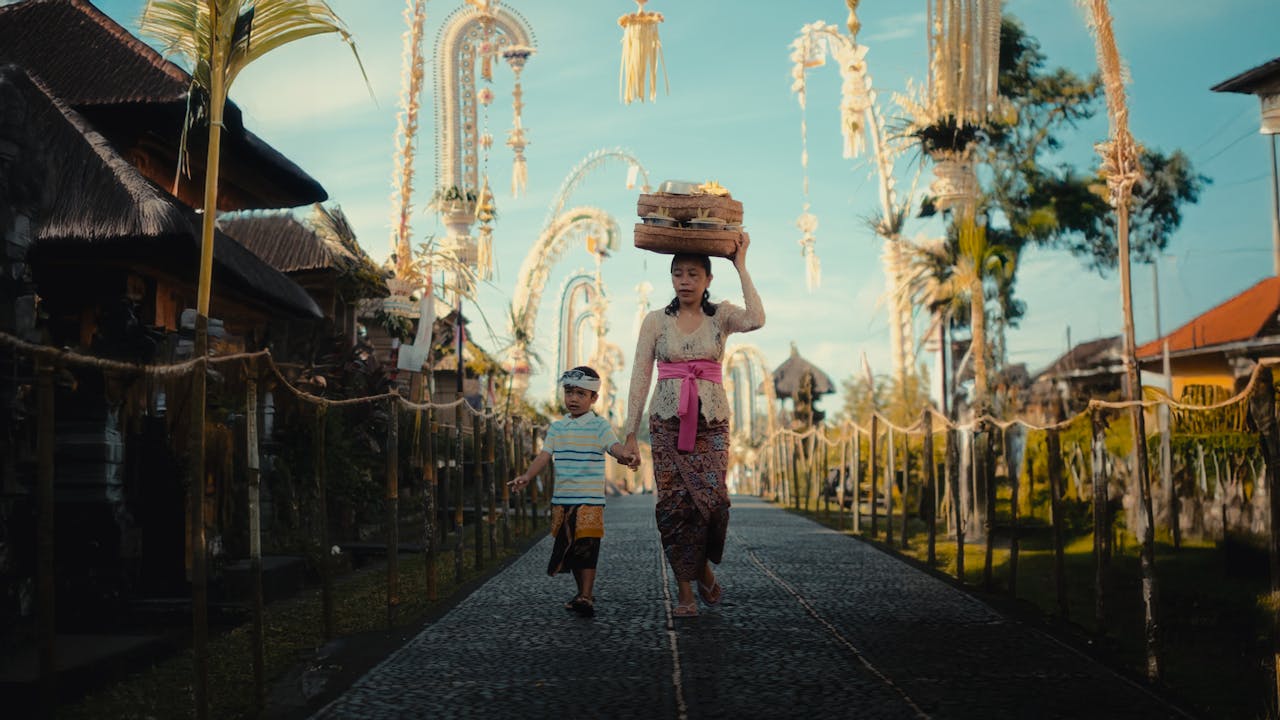
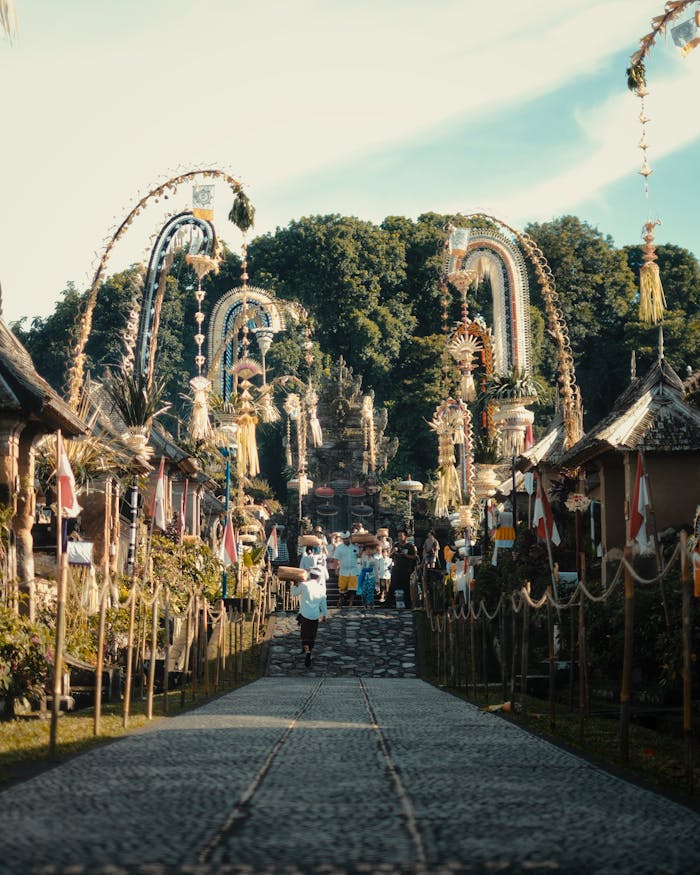
The village is clean, the houses align perfectly, and the main street feels calm and controlled.For many visitors, Penglipuran becomes a symbol of the “traditional Balinese village.”
What is often missed is that this order is not aesthetic. It is discipline — social, cultural,
and communal.
What Is Penglipuran Village?
Penglipuran is a traditional village in Bangli Regency, known for preserving a strict village
layout, architectural uniformity, and customary law (awig-awig) that governs daily life.
Unlike villages that evolve organically over time, Penglipuran is highly regulated. House
compounds follow the same structure, heights are controlled, materials are restricted, and
public space is collectively respected.
This is not nostalgia. It is governance.
Order Is Not Decoration
Architecture as social agreement
In Penglipuran, architecture is not an individual expression. It is a shared agreement.
Each household follows the same spatial logic — sacred space, living space, and service space
arranged according to Balinese cosmology. This consistency is not maintained for visitors,
but for harmony within the community.
The visual calm admired by visitors is the outcome of collective restraint.
Order here is not about beauty. It is about balance.
Daily Life Behind the Symmetry
What visitors rarely notice
Behind the symmetry, daily life continues with its usual demands. Residents work outside the
village, ceremonies require time and resources, and rules must be followed even when
inconvenient.
Maintaining order takes effort. Discipline is not passive.
For residents, Penglipuran is not a preserved scene. It is a commitment renewed every day.
Penglipuran Compared to Sebatu and Sidemen
| Sebatu | Sidemen | Penglipuran |
|---|---|---|
| Ritual-centered | Labor-centered | Rule-centered |
| Organic rhythm | Landscape-driven | Structured order |
| Shaped by water | Shaped by land | Shaped by regulation |
| Quiet through continuity | Quiet through work | Quiet through discipline |
Penglipuran does not replace other villages. It explains a different pillar of Balinese life:
structure.
Who Penglipuran Is (and Is Not) For
Penglipuran suits:
- first-time visitors seeking cultural clarity
- travelers interested in social systems
- people who appreciate order and structure
Penglipuran may feel limited for:
- slow travelers seeking spontaneity
- visitors expecting immersive village interaction
- those looking for untouched rural life
Penglipuran teaches through form, not atmosphere.
When Penglipuran Feels Most Authentic
Penglipuran feels most authentic when treated as a living system rather than a photo location.
Early mornings and ceremonial days reveal how rules function not as restrictions, but as
coordination.
The village feels alive not despite its rules, but because of them.
Penglipuran as Part of Bali’s Living Villages
Penglipuran demonstrates how Balinese culture survives through systems, not sentiment.
Where some villages rely on ritual or labor, Penglipuran relies on agreement and discipline.
A Reflection Before You Visit
Penglipuran does not invite freedom of exploration. It invites understanding through observation.
If you arrive seeking authenticity as spontaneity, you may feel constrained.
If you arrive ready to observe how order shapes daily life, Penglipuran offers a quiet lesson:
harmony is often built, not felt.
Continue the Journey
Penglipuran represents Bali’s tradition of structure and shared discipline — one of many ways
village life continues across the island.
→ Explore Village Destinations in Bali
Editorial note for Gangga Experience: This article is part of the Village series, exploring how
Balinese villages function as living systems rather than destinations.