

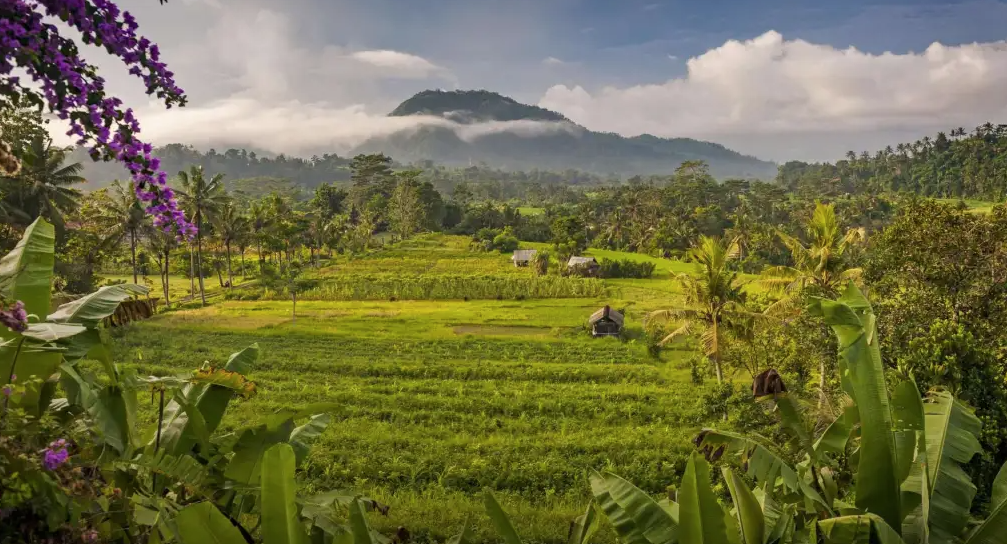
It is quiet not because it is curated, but because people here are working.Fields are planted, water is managed, paths are walked daily, and rituals follow the rhythm of labor rather
than the expectations of visitors. What you encounter in Sidemen is not stillness as an idea, but stillness
that comes after effort.
What Is Sidemen Valley?
Sidemen is not a single village in the conventional sense. It is a valley system made up of small settlements,
rice fields, footpaths, temples, and waterways spread across the hills of Karangasem.
Unlike destinations organized around a central attraction, Sidemen feels dispersed. Life happens across
slopes and fields rather than at a focal point. To understand Sidemen, you must accept movement — walking,
observing, waiting — as part of the experience.
Sidemen is not designed to be consumed quickly. It asks for time, and rewards patience.
A Valley Built Around Farming
Rice fields, water channels, and daily labor
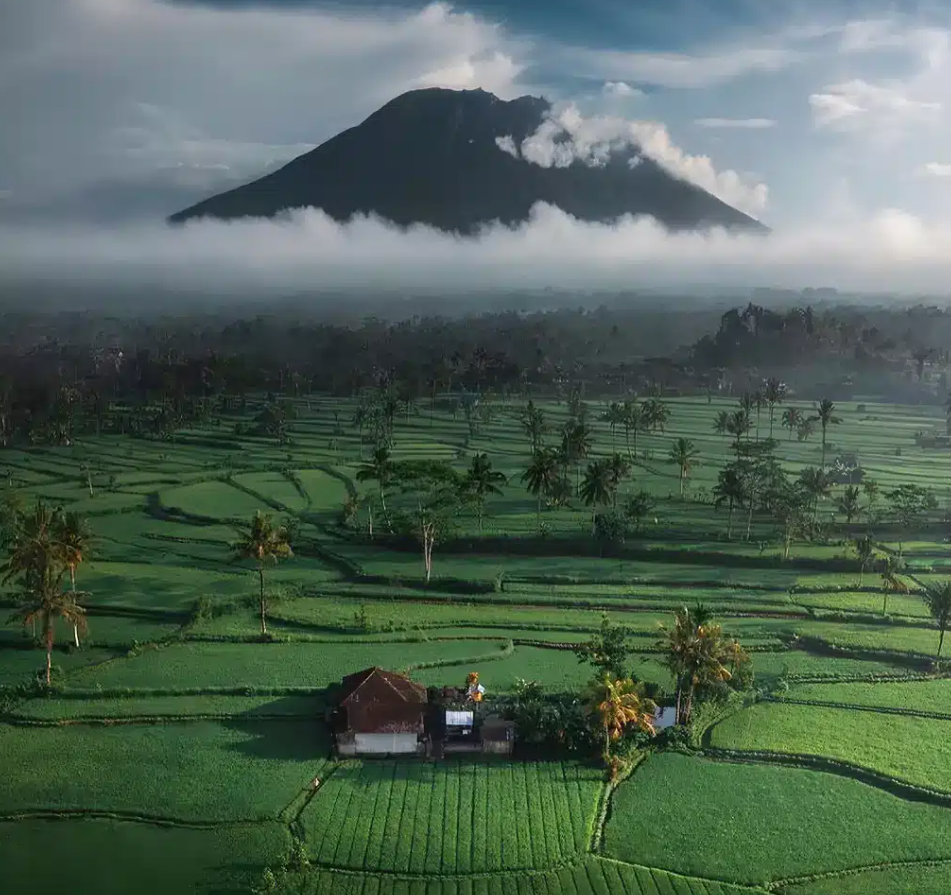
In Sidemen, agriculture is not a backdrop. It is the structure holding the valley together.
Rice fields determine where houses stand. Water channels shape daily schedules. Paths exist because people
need to reach fields, temples, and neighboring homes on foot. The landscape is practical before it is beautiful.
The subak irrigation system here is not discussed as philosophy. It is practiced as routine. Water distribution,
planting cycles, and maintenance are communal responsibilities — not cultural performances.
What visitors often see as peaceful scenery is, for locals, a working environment.
Daily Life in Sidemen Is Physical
Walking, carrying, planting, waiting
Life in Sidemen is felt through the body. People walk long distances daily. Loads are carried by hand.
Planting, harvesting, and maintenance happen under changing weather conditions.
Silence arrives not because noise is restricted, but because energy is spent.
This physicality creates a different kind of quiet — not the silence of retreat, but the calm that follows
sustained effort.
Sidemen, Sebatu, and Ubud: Three Different Rhythms
| Ubud | Sebatu | Sidemen |
|---|---|---|
| Cultural center | Spiritual village | Agricultural valley |
| Curated experiences | Ritual continuity | Labor-driven rhythm |
| Visitor-oriented | Community-oriented | Land-oriented |
| Movement and variety | Balance and repetition | Work and patience |
Sidemen complements Sebatu. Where Sebatu is shaped by ritual and water, Sidemen is shaped by land and labor.
Together, they reveal Bali as interconnected systems rather than a single experience.
Who Sidemen Is (and Is Not) For
Sidemen is well suited for:
- slow travelers
- long-stay visitors
- people who enjoy walking and observing
Sidemen may feel challenging for:
- nightlife seekers
- tightly scheduled itineraries
- visitors seeking immediate highlights
Sidemen does not entertain. It occupies.
When Sidemen Feels Most Honest
Sidemen does not peak at a certain hour. It feels most honest early in the morning when farmers begin before
the heat rises, at midday when the valley pauses, and in the late afternoon as work slows.
Nothing announces itself — and that is precisely the point.
Sidemen as Part of Bali’s Living Villages
Sidemen shows how Balinese villages function when land remains central to life. It reminds visitors that
wellness often comes from routine, calm follows work, and culture survives through practice.
Sidemen does not represent Bali’s past. It represents a way of living that continues quietly in the present.
A Reflection Before You Visit
Sidemen does not promise insight or transformation. What it offers instead is honesty — about time, effort,
and the pace at which life moves when shaped by land.
If you arrive expecting stillness, you may miss it. If you arrive willing to walk, wait, and observe,
Sidemen may quietly change how you understand calm.
Continue the Journey
Sidemen is one expression of Bali’s living village systems, where land, labor, and daily rhythm remain
inseparable.
Explore other villages across Bali where ritual, agriculture, structure, ancestry, and modern pressure
shape how life continues beyond tourism.
→ Explore Village Destinations in Bali
Editorial note for Gangga Experience: This article is part of the Village series, exploring how Balinese
villages function as living systems rather than destinations.


