

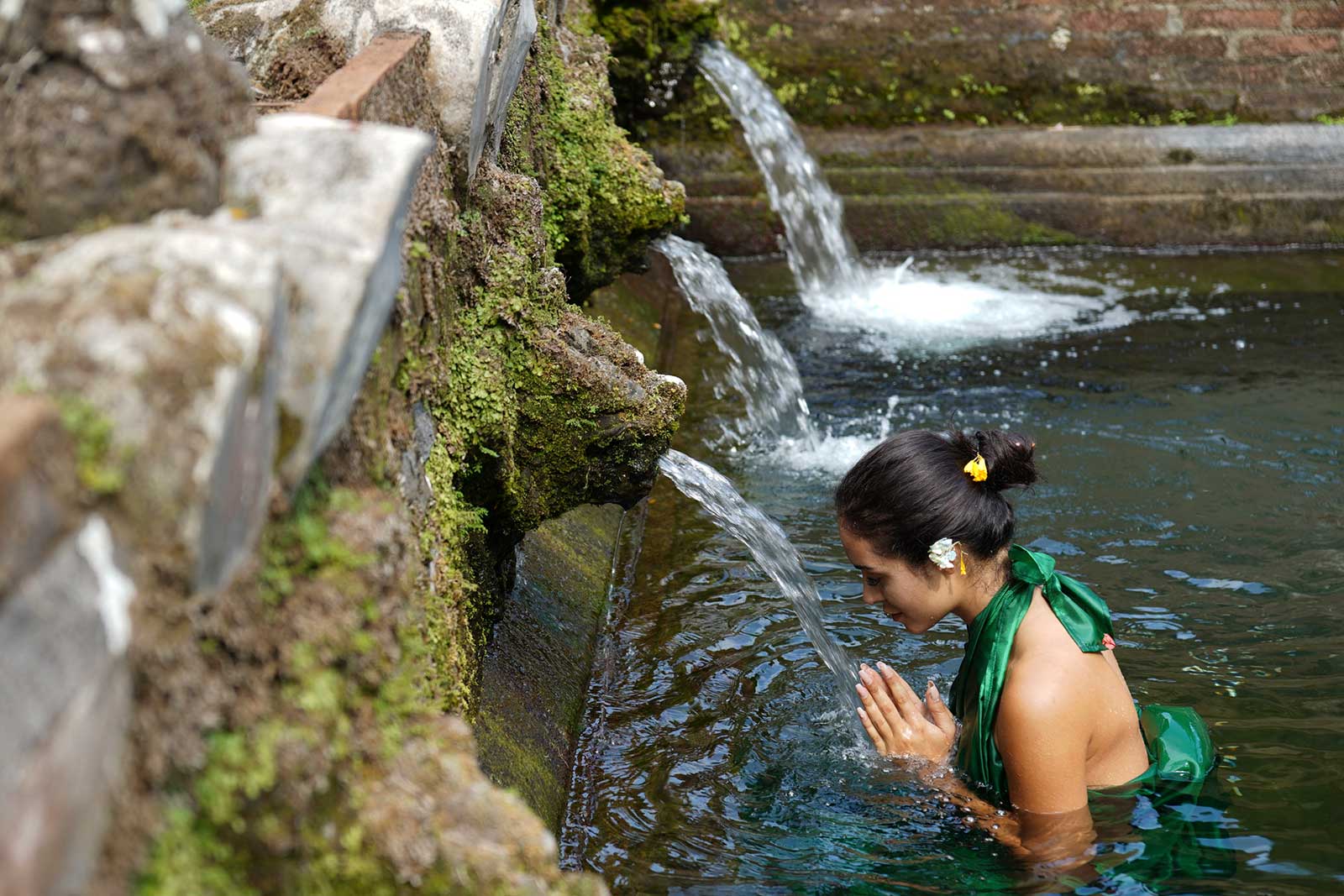
Balinese Hindus for melukat, a ritual purification intended to restore balance between body, mind, and spirit.
Located in the highlands of Sebatu Village, roughly 25 minutes north of Ubud, this holy spring offers a different
atmosphere from the island’s more popular purification sites: calmer, more private, and deeply rooted in living
village tradition.This is not a “tourist ritual.” Sebatu Holy Spring Water remains meaningful because it is still used with sincerity—where
water is treated not as an attraction, but as a sacred element of daily spiritual life.
Understanding Sebatu Holy Spring Water in Balinese Spiritual Life
In Balinese Hindu belief, water is more than a physical resource. Holy spring water is understood as a medium for returning
to alignment—especially during times of transition, emotional heaviness, illness, uncertainty, or after periods of intense
activity. Purification is not framed as punishment, but as re-centering.
That is the deeper context of melukat: a ritual cleansing using holy water to release what feels out of balance and
return to clarity. Because Sebatu Holy Spring Water is relatively secluded and tied closely to local practice, the experience
here tends to feel less performative and more grounded in living tradition.

The Sacred Temples of Sebatu Holy Spring
The purification ceremony at Sebatu Holy Spring Water takes place near two important spiritual sites that
reinforce the sacred nature of the area:
These temples are not tourist attractions in the conventional sense. They remain active places of worship where local residents
regularly pray, make offerings, and participate in rituals connected to meaningful life moments—family ceremonies, cycles of the
Balinese calendar, and personal spiritual needs.
Their presence matters, because it frames the holy spring correctly: purification here is not symbolic or staged. It is a
living religious practice that continues alongside daily village life.
What Is the Melukat Purification Ceremony?
The melukat purification ritual at Sebatu Holy Spring Water follows a respectful sequence of preparation,
prayer, and cleansing with holy water. While exact details may vary depending on the local context and the day, the essence
remains consistent: the ceremony is performed with intention and etiquette rather than speed.
A typical purification flow may include:
- quiet preparation and guidance on respectful behavior
- offerings and short prayers before entering the water
- cleansing at specific water spouts where holy water flows continuously
- a concluding moment of gratitude and grounding
People often describe the experience as calming, emotionally lightening, or mentally clarifying. In the local frame, melukat is
not “instant transformation.” It is a ritual of restoration—bringing you back to baseline, so you can move
forward with steadier awareness.

Why Sebatu Holy Spring Water Feels Different From Other Purification Sites
Many well-known purification spots in Bali are now crowded and highly visible. Sebatu Holy Spring Water offers a different
experience not because it tries to be exclusive, but because it remains connected to its original function.
What makes it feel different:
- Seclusion and stillness — the site is not shaped around mass visitation.
- Stronger connection to nature — the surrounding environment supports quiet attention.
- Village rhythm — ceremonies and practices follow local pace, not visitor schedules.
- Temple presence — the holy spring sits within a sacred geography anchored by active worship.
Sebatu’s setting—within Bali’s highland landscapes—often amplifies the feeling of calm. The experience tends to reward those who
arrive with patience, not those rushing for a highlight.
Why a Guide Matters
Sebatu Holy Spring Water is considered sacred and is not always straightforward to access independently. The paths can be unclear,
and more importantly, the ritual context and etiquette matter. Visiting with guidance helps ensure the experience is respectful and
meaningful—especially for first-timers.
A knowledgeable guide supports:
- understanding temple etiquette
- timing and sequence during the ritual
- appropriate behavior and intention
- respecting the space as a living spiritual site
Completing the Purification Experience
Many guests find that the most important part happens after the water: the quiet period where the mind feels slower
and the body feels more grounded. That is why it helps to avoid stacking this ceremony into a rushed itinerary.
For travelers who want to stay close to Sebatu’s rhythm and environment, Puri Gangga Resort offers a natural base—
quiet enough for reflection, close enough to remain connected to the village atmosphere. The goal isn’t isolation; it’s continuity—
letting the calm carry into the rest of the day.
A Sacred Experience Rooted in Living Tradition
Sebatu Holy Spring Water is not a destination created for spiritual tourism. It is a sacred place with ongoing relevance for the local
community—where water, prayer, and nature remain inseparable.
If you are seeking a purification ritual in Bali that feels less crowded and more grounded in living practice, Sebatu Holy Spring Water
offers a rare kind of clarity: not dramatic, not performative, but quietly real.
Continuing the Wellness Journey
The purification ritual at Sebatu Holy Spring Water is often just one moment within a wider journey
of balance and reflection. In Bali, wellness is not experienced all at once, but unfolds gradually
through water, ritual, rest, and daily rhythm.
If you wish to explore how wellness is practiced across villages, rituals, and places connected to
Gangga Experience, you may continue here:
→ Explore Wellness Experiences
Reservation & Information
For purification ceremonies and guided experiences at Sebatu Holy Spring Water, please contact:
reservation@ganggaexperience.com | ganggaexperience.com


